
Navigating difficult conversations: how to handle late rent and noise complaints
A practical guide to handling late rent and noise complaints under the Renters' Rights Act 2025, fairly, calmly and without burning the tenant relationship.
On this page
Most landlords and letting agents do not get into property because they enjoy confrontation. The day to day is fairly steady: rent comes in, the boiler gets serviced, the gutters get cleared. Then the rent does not arrive, or a neighbour rings to say the flat above them has had music thumping through the ceiling until two in the morning, and suddenly you are bracing yourself for a conversation you would rather not have.
These moments are part of the job, and how you handle them matters more than it used to. Since the Renters' Rights Act 2025 came into force on 1 May 2026, the rules around ending a tenancy have changed significantly. Section 21 "no fault" evictions are gone, the bar for rent arrears possession has risen, and every possession claim now goes through the courts. In practice, that puts a premium on two things: handling problems early, and keeping a clear record of how you handled them. The conversation you have today is part of the evidence trail you may rely on later.
The good news is that the skills involved are learnable. A difficult conversation handled well usually defuses the problem long before it reaches a courtroom. Here is how to approach the two most common flashpoints in any tenancy: late rent and noise complaints.
Why these conversations carry more weight in 2026
It helps to understand the new backdrop before you pick up the phone. Under the Renters' Rights Act 2025, the mandatory rent arrears ground (Ground 8) now requires three months of arrears for monthly tenancies, or 13 weeks where rent is paid weekly or fortnightly. That is up from two months under the old rules. The notice period for that ground has also doubled, from two weeks to four. On top of that, arrears caused purely by a delay in a tenant's Universal Credit payment are excluded from the calculation.
For anti-social behaviour, including persistent noise, the picture is similar. Most cases fall under Ground 14, a discretionary ground, which means a judge weighs up whether eviction is reasonable rather than granting it automatically. One of the things the court now looks at is whether the tenant cooperated with any attempt you made to get the behaviour to stop. In other words, the conversations you have are no longer just good manners. They are the foundation of your legal position.
The takeaway is straightforward. With the easy exit route removed and the thresholds higher, early, fair and well-documented communication is your strongest tool. It is cheaper than court, faster than court, and far more likely to keep a decent tenant in place.
Before you say a word: prepare properly
A difficult conversation goes far better when you walk into it calm and well briefed. Rushing in while you are annoyed almost always makes things worse.
Take a few minutes to get your facts straight first:
- Check the tenancy agreement so you know exactly which clause has been breached, whether that is the rent payment terms or a clause on noise and nuisance.
- Pull together the relevant records: the rent ledger, dates of missed payments, any previous reminders, or in a noise case the dates and times complaints were made.
- Separate the facts from your feelings. "Rent due on the 1st has not arrived and it is now the 9th" is a fact. "This tenant is taking advantage" is a feeling, and it has no place in the conversation.
- Decide what a good outcome actually looks like. Usually it is not eviction. It is the rent being paid, or the noise stopping, with the tenancy intact.
Going in prepared signals that you are organised and serious, which tends to encourage a more constructive response from the other side.
Handling late rent without burning the relationship
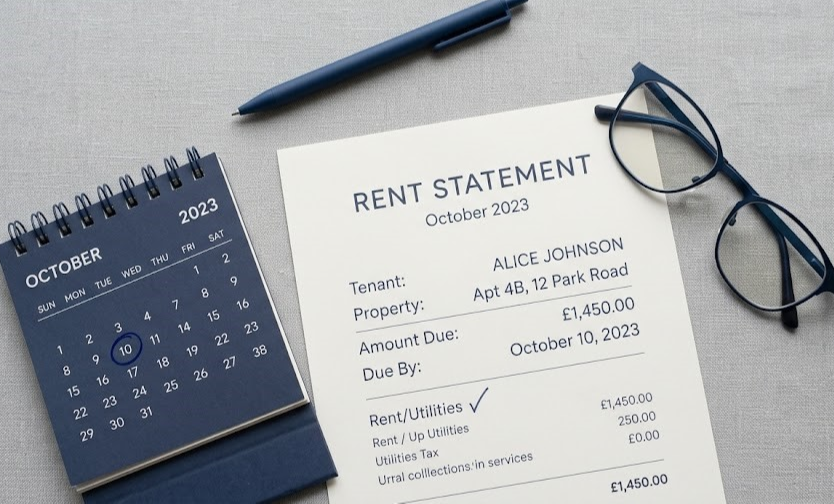
The single most important rule with rent arrears is to act early. A tenant who is one week behind is in a very different situation from one who is three months behind, both emotionally and legally. The earlier you make contact, the more options remain open to everyone.
Keep the first contact light and human. A short, friendly message noting that the payment has not come through and asking whether everything is alright will resolve a surprising number of cases on its own. People forget, change banks, or hit a one-off cash flow problem. A heavy-handed legal letter as the opening move can sour a relationship that did not need to sour.
If the rent is still not paid, move to a proper conversation, and lead with a question rather than an accusation. Ask what has happened. The reason genuinely matters, both practically and under the new rules. A tenant waiting on a delayed Universal Credit payment is in a category the law treats differently from someone who has simply decided not to pay. Listening first tells you which situation you are in.
From there, the goal is a realistic plan:
- If it is a temporary problem, agree a clear repayment schedule in writing, with specific dates and amounts.
- If the tenant's circumstances have changed for the longer term, point them towards help. The local council, Citizens Advice, or the housing element of Universal Credit may all be relevant.
- Confirm whatever you agree in a follow-up message, so both sides have the same understanding on record.
Be warm but do not be vague. It is entirely possible to say "I want to help you sort this out" and "the full balance needs to be cleared by the end of the month" in the same conversation. Tenants generally respect a landlord who is firm and fair far more than one who is either a pushover or a bully.
If arrears keep climbing despite your efforts, that is the point to take advice on formal possession grounds. But by then you will have done the responsible thing, and you will have the paper trail to prove it.

Handling noise complaints fairly
Noise is the most common anti-social behaviour complaint landlords face, and it is also the most frequently misjudged. A Housing Ombudsman report found that roughly three quarters of anti-social behaviour complaints were actually about everyday lifestyle noise rather than genuine nuisance. Footsteps, a baby crying, a washing machine running, a normal conversation carrying through a thin wall. None of that is anti-social behaviour, and treating it as such can land you in trouble for harassing a tenant who has done nothing wrong.
So the first job is to work out what you are dealing with. Genuine nuisance tends to be persistent, deliberate or clearly excessive: regular late-night parties, music played at a volume designed to be heard streets away, shouting and aggression. A one-off loud evening is not, on its own, a pattern.
Once you are satisfied there may be a real issue, here is a sensible order of play:
- Speak to the tenant directly, if it is safe to do so. Keep it informal but make a note of it afterwards. Frame it around shared living and consideration for neighbours, not blame. Many complaints end here.
- Keep an incident diary. Record dates, times, what was reported and what you did about it. This is exactly the kind of evidence a court will want to see later, and many councils provide a template.
- Ask the complainant's permission before naming them or using their account as evidence, and consider whether they could be easily identified.
- Consider mediation. A neutral third party can resolve neighbour disputes that have become personal, and the courts look favourably on landlords who tried it.
- Involve the local authority where appropriate. Council environmental health teams can investigate noise, and they have real powers, including noise abatement notices and community protection notices.
Throughout, keep your tone firm but neutral, and avoid anything that reads as a threat in writing. If a tenant discloses a health condition or vulnerability, take it seriously and signpost support rather than escalating. Should the behaviour prove serious and persistent, the relevant possession grounds exist, but they sit at the end of a fair process, not the start of one.
The communication habits that work for both
Late rent and noise look like different problems, but the conversations that resolve them rely on the same handful of habits.
- Be specific. "You're always behind" invites an argument. "The June and July payments are outstanding" does not.
- Listen before you decide. The cause of the problem usually points to the solution.
- Stay calm and stay professional. You can be sympathetic and still hold a clear line.
- Put it in writing. A short, friendly follow-up confirming what was agreed protects everyone and removes ambiguity.
- Document everything. Under the current rules, your records are not just admin. They are your evidence.
Notice that none of these depend on legal knowledge. They depend on preparation, fairness and consistency, which is reassuring, because those are things any landlord or agent can get good at.
Where good systems make the difference
The hardest part of handling these situations well is rarely the conversation itself. It is having the right information in front of you at the right moment: when the rent actually fell behind, what was said in March, which clause of the agreement applies, and where the evidence is stored. Trying to reconstruct all of that from memory and a scattered email inbox is what turns a manageable issue into a stressful one.
This is where keeping your tenancies organised pays for itself. When your rent records, communications, compliance documents and tenancy terms all live in one place, a difficult conversation becomes something you can prepare for in five minutes rather than dread for a week. Landy is built to give landlords and letting agents exactly that: a clear, current view of every tenancy, so that when a tricky moment arrives, you can handle it early, fairly and with the records to back you up.
Difficult conversations will never be the favourite part of anyone's week. But handled with preparation and a bit of empathy, they are far less daunting than they look, and they keep good tenancies on track long before anyone needs to think about a courtroom.
Run your rentals with Landy
UK property management software for landlords, estate agents, and tenants. Property records, tenancies, documents, and issue tracking.